A field guide to the groove
Rings, arches, ladders, dot rows, slopes and boxes: the six shapes that the geometric work is built from, and where to find each one.
Words by ARTHAUS

Spend a few minutes with the geometric series and the same handful of shapes keeps coming back, recombined each time. Learn to spot them and every piece becomes easier to read.
1. Rings
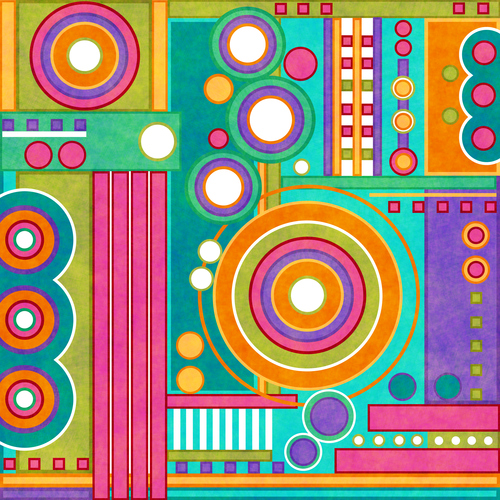
Concentric circles, often with a bright dot at the centre, like a record or a dial. Twirl is built around a large set of them, set just right of centre; Revolving and Orbit scatter them across the surface.
2. Arches
Half-circles stacked inside one another, rising from a straight edge like a rainbow or a tunnel mouth. They turn up across the series and give the flatter compositions their sense of movement.
3. Ladders
Tall bars broken into rungs of small squares, usually in alternating colours. They act as dividers, splitting the square into sections.
4. Dot rows
Lines and grids of small circles, sometimes sitting inside a bar, sometimes floating in open space. They are the quickest way to spot a piece from across a room.
5. Slopes
Triangles and diagonal splits that break up the horizontals and verticals. Where most of the shapes are square to the frame, a slope is the one that leans.
6. Boxes
Squares nested inside squares, each in a different colour. They anchor corners and fill the gaps between bigger shapes.
Once you know the six, try the Joy test: count how many you can find in one piece.


